

Olympic Countdown: Host Profile
There is exactly 80 days until the start of the Winter Olympics in Pyongyang. It is time to learn something about the host country of the Olympics, its customs, specificities, history and culture.
The official name of the country is the Republic of Korea. South Korea extends over an area of about one hundred thousand square kilometers and lies in the South Korean Peninsula. It is home to just over 51 million people, mostly in cities that are very densely populated. For example, in Seoul, the population density is 16,500 people per square kilometer. But this is not the case in Pyeongchang, where the Winter Olympics will take place.
South Korea is administratively divided into eight provinces, one self-governing province, six self-governing cities, one city with special autonomy and one special city, which is a status reserved for the capital, Seoul.
Pyongyang is a district in the Gangwon province, which is the least developed of the eight. While Seoul (in its urban area) has an area of 605 square kilometers and around 10 million inhabitants, the province of Gangwon, which is about as big as Slovenia (about 20,000 square kilometers), has a total of half a million inhabitants. This can be felt as a pleasant lack of crowd and stress, and plenty of pure air and untouched nature.
South Korea is one of the most homogeneous countries in the world, as Koreans make up 99 percent of its population. Nevertheless, more and more foreigners are immigrating there, currently estimated to be about one and a half million. Koreans are among the most educated nations in the world. Not only have they achieved 100% literacy, more than 68% of citizens aged between 25 and 34 have a university degree. In this regard, South Korea occupies the first place among the OECD member countries.
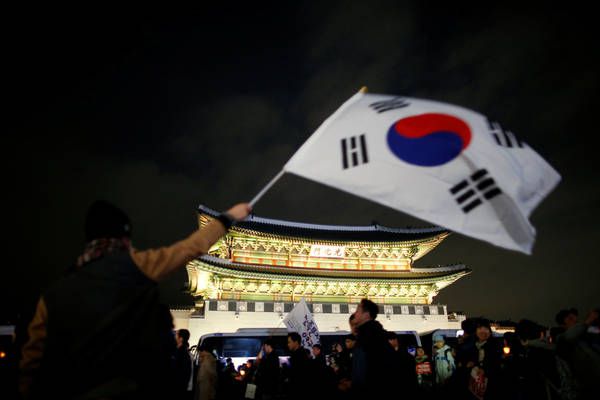
The South Korean anthem is officially called the Patriotic Song, and the flag is taegukgi, which in a literal translation represents a superior ultimate flag. The South Koreans are particularly sensitive to their flag, whose connotation exceeds only the national symbol, but also includes the perception of the superior Korean race. The Koreans are very proud of their civilization and culture, so this should be kept in mind in every contact with the members of this great and proud nation.
Photo credit: Kim Hong-Ji/Reuters